State executive race · November 3, 2026
Governor
The governor is New Mexico's chief executive, who proposes the state budget, signs or vetoes legislation, and appoints the heads of state agencies.
4-year term. Open seat: no incumbent is running. Incumbent Gov. Michelle Lujan Grisham (D) is term-limited. The governor and lieutenant governor are elected jointly on one ticket. Two tickets are printed on the ballot. Democratic lieutenant governor nominee Maggie Toulouse Oliver withdrew in June 2026, and the state Democratic Central Committee named Stephanie Garcia Richard as the replacement on July 30, 2026. Independent (decline-to-state) candidates who filed for governor, including Ken Miyagishima, are listed as disqualified by the Secretary of State.
The candidates
Listed alphabetically by last name.
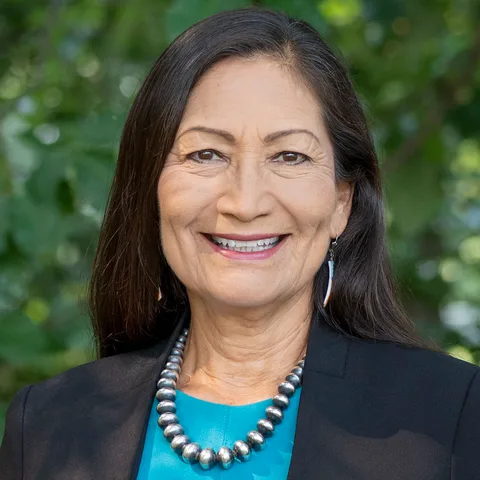
Deb Haaland
Former U.S. Secretary of the InteriorRunning mate: Stephanie Garcia Richard (Lieutenant Governor)
Haaland, an enrolled member of Laguna Pueblo, served as U.S. Secretary of the Interior from 2021 to 2025 and before that represented New Mexico's 1st Congressional District. She won the June 2026 Democratic primary over Sam Bregman. Her campaign focuses on lowering costs, housing, public safety, overhauling the state's child welfare agency, and opposing Trump administration policies.
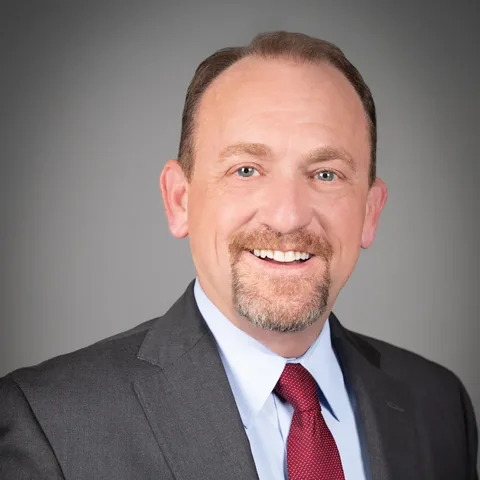
Gregg Hull
Former Mayor of Rio RanchoRunning mate: David Gallegos (Lieutenant Governor)
Hull is a former small-business owner who served three terms as mayor of Rio Rancho from 2014 to 2026, the longest tenure in the city's history. He won the June 2026 Republican primary over Doug Turner and Duke Rodriguez. His campaign focuses on reforming the state's child welfare agency, phasing out the personal income tax, public safety, and school performance.
Compare on the issues
Summaries of each candidate's stated positions. See each profile for sources and details.
| Issue | Deb Haaland Democratic | Gregg Hull Republican |
|---|---|---|
| Children & Families | Pledges to overhaul the Children, Youth and Families Department, starting with an experienced cabinet secretary and moving toward an independent commission, and to strengthen the Office of the Child Advocate. | Would appoint a CYFD secretary with child welfare experience, set caseload limits, require licensed professionals to lead investigations, and give the Office of the Child Advocate full access to case records and subpoena power. |
| Education | Proposes earlier literacy screening, expanded career pathways starting in middle school, community school models, and expanding the Opportunity Scholarship for free college tuition. | Proposes tying a portion of school funding to gains in literacy, math, and graduation rates, raising math standards, addressing chronic absenteeism, and "responsibly expanding school choice and high-quality charter schools." |
| Public Safety | Proposes more tools and technology for law enforcement to arrest violent offenders and track drug traffickers, an Office of Community Safety with social workers, expanded addiction treatment, and violence-prevention programs. | Supports long-term state funding to make police pay competitive with neighboring states, grants to help cities and counties hire officers, and expanded behavioral health crisis response teams. |
| Taxes | Proposes increasing and expanding eligibility for the state Child Tax Credit and Working Families Tax Credit, and raising the minimum wage. | Proposes "Four Steps to Zero," a phased elimination of the state income tax on wages and retirement income, starting by exempting the first $25,000 for individuals and $50,000 for married couples. Each step would depend on fiscal tests, including a 25 percent reserve floor; business profits would remain taxable. |
| Child Care | No public position found yet | Called the state's universal child care program "great in concept" and said he would consider scaling it back rather than ending it. |
| Economy & Jobs | No public position found yet | Supports full occupational license reciprocity for professionals licensed in good standing in other states, firm timelines for licensing decisions, expanded career and technical education, and targeted incentives for aerospace, defense, bioscience, and energy technology. |
| Energy & Environment | Supports a moratorium on new large-scale data centers until the state sets rules on water use, energy, and local benefits, and proposes expanding state investment in renewable energy to lower utility costs. | No public position found yet |
| Health Care | Proposes measures to address the doctor shortage, more mobile health clinics, banning medical debt from credit reports, and using budget surpluses to fill Medicaid gaps. | No public position found yet |
| Housing | Says she would "aggressively build more housing" by cutting barriers and speeding permits, ban rent-setting algorithms, and expand down payment assistance for first-time buyers. | No public position found yet |
| Infrastructure | No public position found yet | Proposes an Infrastructure Execution Office, procurement reform, and a public dashboard tracking major projects; on water, supports conservation, aquifer recharge, and brackish water development. |